
Job search advice is almost as plentiful as weight loss solutions these days, it seems – and just as effective. Books, newspaper columns, radio shows, web articles, blogs, and career sites are just some of the places offering their wisdom. In the last week, I read competing articles on two of the largest web portals that listed “myths” about job searches. Several myths were in both articles, and on two of those, the authors had opposing answers – basically, one said “Do this,” and the other said “Don't do this.”
Psst, Hey Buddy... Wanna Hot Job?
Here’s one example of the phony advice being offered to new graduates and other first time job seekers: “pursue ‘informational interviews’ as a way to expose yourself to an organization.” Supposedly, employers are willing to accommodate a fact-finding interview, an “informational interview,” even if they do not have an open position.
The Bogus "Informational Interview"
If you focus on all of the steps in this process, execute each of them well and repeatedly, you will meet those milestones, and the result will be a job offer you want. My process is very simple – it just isn’t very easy. There are easier ways to find a job, and if you choose those methods over mine, you will get the job you deserve – but not the one you want.
How To Get a Job in 25 Words or Less
1. The Candidate did not adopt a committed, passionate, "failure is not an option" attitude about finding a job. Many job seekers think that just because they have a new degree, or military training, or some other advantage, that it's going to be easy to find a job. They have absolutely no idea how many interviews and interview cycles are typically required to find a job. They have no idea of the massive number of cold calls it takes to get an interview. Surprised and unprepared to make that commitment, candidates will often quickly grow frustrated with initial rejections.
9 Job Search Do-Nots
You are graduating into a very competitive job market. You need to understand exactly how competitive, and your school placement or career departments can be very helpful. With their help, you can determine how many graduates are entering the local and national markets with your degree.
Understanding Your Competition
If any of these tips seem obvious, know that I have seen candidates fail to execute each one. If you want to compete in the adult world for a good job, look and act like an adult capable of performing that job. Here are a few basic requirements:
Put on a Suit to Make a Phone Call!
Assess your aptitude for particular careers before you look for a job. Everyone has strengths and weaknesses; yours may not match well with the career you are considering. Ideally, you would have done this the year before you graduate.
Play to Your Own Strengths
This Tip’s information is the most important I have to offer. Ignore me if you want, but not if you are serious about finding a job.
Finding a Job is a JOB!
The first step in your plan to deal with negativity was to understand and expect it. The second step of the plan is to have a plan – a job search plan. Obviously, you have already started that plan because you are using this program, but here’s the secret you probably didn’t know: simply having a plan and working it is your best defense against stress and depression.
Psyche Out the Negativity
“Give me a stock clerk with a goal and I’ll give you a man who will make history. Give me a man with no goals, and I’ll give you a stock clerk.”
J.C. Penney
Consider downloading your goals to your IPod or MP3 player. Along with other motivational tapes, you can listen to your verbalized goals as you drive in your car, jog, do housework, etc. Here are the rules for writing S.M.A.R.T. goals:
The Rules for Writing Goals - Be S.M.A.R.T.
Here are a few sample goals that would have a positive impact to a job seeker:
Power Goal Compilation
"Those who say some people were just lucky because they were in the right place at the right time don't realize that the lucky ones show up at a lot of the right places a lot of times.”
Tony Beshara
Many students limit their initial job search to companies attending their school’s Career Day job fair. Most of those companies hire very few students...Do not, under any circumstances, delay your job search based on an interview you had at a campus job fair.
Job Fairs - Beauty Contests or Guerilla Marketing?
There are 56,000,000 resumes on the Internet. It is estimated that for every job posting on the Internet, on more than 40,000 job boards, the companies receive 275 resumes. The probability of you being hired by chasing job postings isn't very great. This is especially true if you simply e-mail your resume and wait for a response.
The Virtual Wastebasket of Emailed Resumes
There are many types of employment agents and recruiters. Today, most do not charge the candidate for their services. This was not always the case. From the 1960s through even the early 1990s, the candidates, or "job applicants" as we called them then, paid all or some of the recruiter’s, or employment agent’s, fees.
Employment Agencies and "Up Front Fee" Consultants
Many recruiting professionals offer services at no cost to the candidate. These recruiters fall into several categories and each may assist your job search. It is important that you understand these categories and target your discussions with them appropriately. Recruiters include:
Recruiters Can Help!
I will now teach you the scripts used to secure interviews. Be sure to keep a written record of your call on this form so you can call people back in the future. In fact, it will keep very good records of everything you do. You don't know how long it is going to take to find a job, so I suggest that you call people back after a month to remind them a second or third time that you are job hunting.
Get the Interview - Foolproof Scripts
I know of one young man who graduated from an Ivy League university. He wanted to get into the investment banking business. In the very middle of an economic recession, he was determined to find a job. With my help, he devised a script to get the attention of any investment banking organization that would listen to him.
Trust the Process
So, you diligently practice this presentation, yet when you call, all you get is a voicemail. You will have to decide whether to leave a voicemail – it is debatable...
But I Left Him a Voicemail
If you have worked at all during your high school or college years, either full or part time, or if you’ve been in the military, you have had some exposure to “working” for a boss. If so, you will probably immediately understand this Tip. If you have not had a boss, this Tip may shock you. Trust me – if you accept what I share with you here, the job search process will be much easier to understand.
Employers - Alpha Dog or Runt on 'Roids?
For the first time, the increase in life expectancy means there will be four generations of people, and therefore candidates, in the work force. Those include the “traditionalists" born between 1922 and 1943, the “boomers” born between 1943 and 1960, the “Gen-Xers" born between 1960 and 1980, and the "millennial" born after 1980. Each generation has a different perspective of the role of work/career in their life.
4 Generations in Your Work Force
You must be aware of the hiring authorities “buying” motivations and how to sell to them. There are basically four questions any hiring organization asks of every candidate, whether they are applying for an entry-level position or to be the company’s next President. Those questions are:
Do YOU Know What the Employers Want
You are trying to communicate to the prospective employer that you are the best person for his open position. The key is to cite examples of your superior performance in both your resume and in the interview. Think of the things that you have done in high school, college, or the military that demonstrate not only the above attributes, but any others that might be positive for a prospective employer. Here's a partial list:
Do You Have What it Takes?
It is always a shock to candidates to find out that the importance of their resume, even a well-crafted resume, is grossly overrated. As a professional recruiter since 1973, I have never seen a candidate hired because of his or her resume. You do need a resume, and it should be well written, but all a resume is going to do is help get you in the door to the interview. The interview itself is where you either win or lose the job offer.
Resumes - Necessary, But Not Much Else
This fact is so simple and yet rarely used: Resumes with a cover letter are most effective when they're supported by an introductory telephone conversation with the hiring authority. Your resume is 85% more likely to be read if the prospective hiring authority associates your voice with the document. Remember the cold call I discussed earlier.
The most effective way of using a resume and cover letter is:
The Real Power Behind Resumes and Cover Letters
You have to research the prospective employer. For students, the career center at your school can really help with research resources. The primary benefit of the Internet to your job search is its help to your research. Years ago at our company, we had a library of catalogs and brochures about the companies with which we did business. Our candidates would review those before they interviewed. The Internet has changed all that.
Do Your Homework First
Practical spirituality is a technique for feeding the spiritual side of your being so that it can reinforce and support the physical, mental, and emotional sides during your stressful job search.
Karma Will Help You Get a Job
With so many candidates from which to choose, employers often use a telephone interview to screen through a large number of people. It has now become a de facto terminator of prospective candidates. This is especially true for entry-level positions.
Get Ready for the Phone Screener
No matter how much preparation and planning you do, no matter how good your resume is, no matter how good your contacts are, no matter how good your grades are, and no matter how prestigious of a school you have graduated from, it is the interview process that is the most important factor in getting hired.
The Successful Interview
Since you don't have a lot of business experience, you may not be aware that often, especially for an entry-level position, the initial interview will be conducted by a third-party instead of the hiring authority. The interviewer who does not have hiring authority is usually going to screen out far more candidates than he or she screens in.
When the Initial Interview is Done by an Interviewing Authority
Versus an HR person or other third party, it is much easier to prepare for an interview with the actual hiring authority. The hiring authority takes long-term, personal responsibility for the decision. Most of the time, this person is responsible not only for hiring you, but also contributing to your success in the job. Usually, his/her success is impacted by whether you are successful or not. This person's reputation is on the line with your hire.
Interviewing with Your Future Boss
From my personal experience, here are the major mistakes that graduates make in the face-to-face interview. I also asked two professionals at major New York investment banks, who interview entry-level candidates on a regular basis, to corroborate these findings. (These are senior, professional bankers, not H.R. folks. They are the hiring authorities – the real deal!) Here are the major mistakes:
Top Interview Mistakes
I will now teach you the absolute best way to conduct an initial interview. Utilize this technique and you will be successful almost every time. Most of the time, once you get the interviewing authority answering your questions, they will "load your shotgun” so that the answers you give will hit the target. Let’s begin:
How to Nail the Initial Interview 95% of the Time
Once you and the hiring authority have reached the end of the interview, you're probably going to get an idea of what the next steps might be. Don't be afraid to be assertive about pushing yourself into the next steps!
Don't Be Afraid to Take the Next Step
The first thing you should do after the interview, when you get in your car, it is to take out the notes you took during the interview and write down a summary of the interview on this form.
The Interview Doesn't End With the Interview
If you have been called back for a second interview, there's a tendency to think you are on your way to getting a job. Wrong! While it is true that you should be congratulated for making it past the initial interview because 90 to 95% of candidates do not make it that far, the race is far from over. The initial interview was necessary for you to get to this level of the interview process, but once you advance, the competition only gets harder!
The Follow-Up Interview
The longer the interviewing process takes, and more people who were involved in it, the less likely it is that you, or anyone else for that matter, will get hired. There is no standard time span for the interview process. I've experienced clients that took 15 minutes to decide, and I've experienced others that took 18 months. I’ve seen many that started with urgency, but ended with no one being hired.
Overtime Could be Sudden Death
The strategy for follow-up interviews is not a lot different from the strategy used in the initial interviews. To a certain extent, you're going to do exactly what you did in the initial interview – with a couple of added steps that give you the advantage. The process is very simple, but most people don't think to do it.
Round 2: Questions YOU Ask
An excellent technique to employ in the interview is tell stories that support the attributes you've applied to yourself. It is likely that in a group interview, especially if it is more than three people, you're going to be addressing people with different personalities. The best way to deal with all of those types of people in the same environment is to tell stories. Stories bypass the listener’s conscious resistance and biases.
Tell Your Story
The average number of interviews required to get the job offer is three. I have worked with companies that conducted as few as one and as many as ten interviews of a candidate. That is ten different interviews with ten different sets of hiring/interviewing authorities. (That depth of process is usually associated with very high positions – VP level and above.)
Hey! Hire me!
I don't like social interviews. Most people are not very good at mixing risky business events, like an interview, with social events that involve meals. I would recommend that you avoid these interviews if possible, but you may not have a choice...
Try to Avoid the "Social Interview"
You may be asked to take all kinds of psychological, aptitude and intelligence tests. Be prepared for what I call, the paradox of testing. Every company that has ever tested candidates will say that, at most, testing accounts for only 25% of their final decision. Don't believe a word of it! Whatever kind of test is used, from grapho analysis to psychiatric interviewing, it is a qualifier that you must pass with an arbitrarily set minimum standard. You will not advance any further in the interview process unless you meet that standard.
Testing - What Kind of Animal Are You?
If you understand that you are always selling yourself and that you have nothing until you have an offer, answering interview questions will be easy. Interviewing is not a "two-way street." It is a "one-way street” until you get the job offer. Once you have an offer, you can then ask all of the questions you want to see what the company is willing to do for you.
Interview Cheat Sheet
Toward the tail end of the interview, you're likely to get this question. Remember how you researched the company before the interview? Now is when it is going to pay off.
"Do You Have Any Questions for Me?"
There are the events that in one way or another don't result in a job offer. As you go through each one of them, you need to assess what you could have done better.
If You Don't Get Hired, Stay in Touch!
So now you've reached the finals and are thinking that the end is near. Wrong!
Don't Relax Yet - Keep Working!
You can’t accept a job offer you don't have. There will be times when you expect an offer and it doesn’t happen. You are going to hear momentary lies like, "We really want to hire you. You’ll hear from us in a day or so.” Don't celebrate anything at this point. Don't believe anything until you have the offer in hand.
What and When to Negotiate
It's hard for me to recommend exactly how to evaluate an offer because a large part of one’s decision to take a job is emotional. No matter how objective we are, the primary difference between an individual taking a job and not taking a job comes down to how they feel about it. Emotions rule most decisions.
Making Your Decision
If you get an offer that you don't think you're going to take, it still may not hurt to hear the company out. If you are absolutely certain that you're not going except this job, it is best to tell the prospective employer within a reasonably short period of time. Also, I recommend calling the hiring authority personally to say how much you appreciate the offer, but at this time you're not in a position to accept it.
How to Refuse an Offer
In general, your ability to negotiate the details of an offer depends on the economy and your individual situation. There have been times, for instance, when candidates right out of school with engineering or technical degrees could collect several offers and literally go to work for the highest bidder. The competition for candidates was very keen and all aspects of the job might be negotiated.
Factors Involved in Negotiation
The first negotiating rule is "never be afraid to walk away." That is a hard concept to understand and difficult to do, especially if you really need a job and have only one offer.
Negotiation 101
Understand this reality: for the vast majority of jobs offered to new graduates, there is going to be little room for "negotiation." The truth is that companies are much more negotiable for someone who brings proven experience that the company does not currently have. For the most part, hiring authorities hiring inexperienced new graduates envision every candidate almost equally. They may like you better than the other candidates, but most likely there isn't a lot of material difference between you and the next candidate.
Negotiating For New Professionals
I'd like to discuss with you some miscellaneous subjects that have to do with your job search, and especially for a new graduate or one new to the job market:
Mentors
A lot is written, and always has been, about mentors. Mentors during the job search are people that might be able to provide insight into a particular job, career, or your search in general...
Mentors and Other Tips
Below you will see actual instructions, questions, and evaluation forms used by one of our clients. The client is a financial organization, so many of the specific questions are financially oriented. You can see that the interviewing authority is given specific instrucitons as to exactly what to ask and what answers to look for.
You can never be too prepared, so find a coach to work with you through this practice interview.
Insight into a Real Corporate Interview
The only way you should alter your presentation in the second and subsequent interviews is that instead of asking, "What do I need to do to get this job?" at the end of the interview, you should ask the interviewer this question:
Winning Round Two
A recent college poll found that 77% of the college graduates expect to be millionaires. Oh, my!
Salary negotiations are always difficult no matter what level of position you are seeking. Until you reach the 20 year experience level, in one particular profession, you are never going to be quite sure exactly what you are worth. Even then, studies show that money is the fourth or fifth “motivator” for professionals.
Once you have received an offer, do not postpone letting the hiring authority know your decision for more than one day. When the candidate asks for a delay the employer could conclude that either the candidate is not very decisive or that the candidate is going to use the offer to leverage another opportunity. I've known hiring managers that rescinded an offer on the spot when the candidate did not appear decisive in their acceptance.
Accepting an Offer
Most people think that once they've started a new job, their job search is over. I’ve been recruiting since 1973 and I continue to be amazed at the strange things that can take place after a person starts a new job.
Final Step: Show Up on the Job!
What Career Services Offices can do for college and university students. (Much of this information was privided by Mr. Jerry Alexander, a veteran Career Center Director, currently with the University of Texas system.)
Don’t overlook your school’s career counseling service can do for you. A recent study found that the career counseling service is one of the most frequently used services compared to other university student services. However, a recent Gallup survey sponsored by the National Career Development Association showed that 60% of the college graduates would try to get more information about job and career options if they were starting over.
The following are a number of Web sites that can help you find a job. The only problem I have with an extensive number of Web sites is that people can get wrapped up in surfing the Web and confuse e-mailing a resume with looking for a job. Don't confuse activity with productivity!
Websites to Help You
In my 33 years as a job recruiter I've helped thousands of candidates find the job they're looking for.
Tony has been featured on the Dr. Phil Show numerous times and according to Dr. Phil, "Tony Beshara is the best of the best" at finding people jobs. More about Tony...
Start here and now: Tip #1
Psst, Hey Buddy... Wanna Hot Job?
Ask Tony Beshara for career advice.
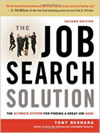
Buy The Job Search Solution by Tony Beshara at Amazon.com!